
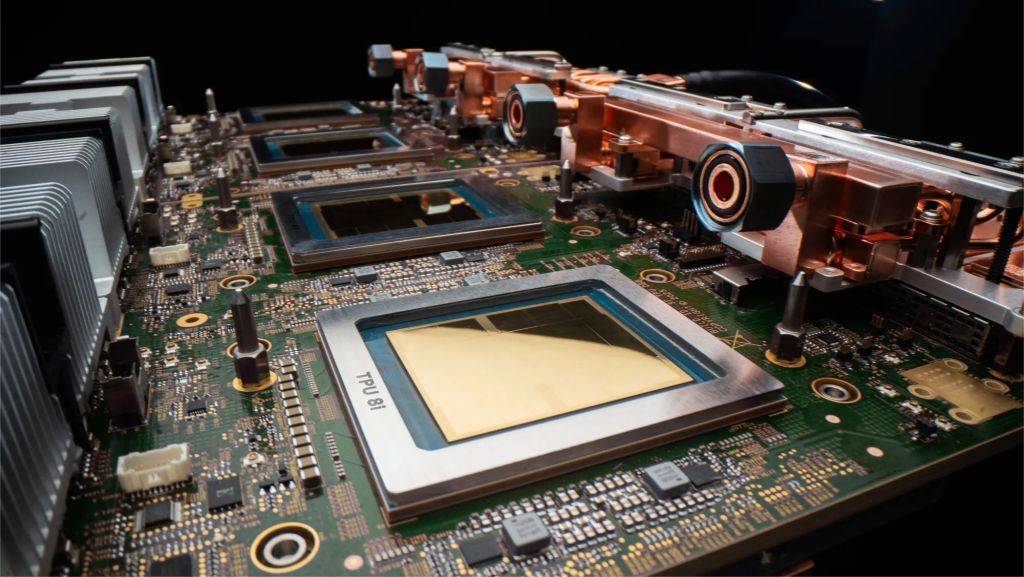
The $190 Billion Declaration of Independence
\n\n
The AI hardware monopoly is officially under siege, and the challenger just dropped a $190 billion war chest on the table. Google’s AI infrastructure plan for 2026 isn’t just a routine network upgrade; it’s a massive, calculated shift to break free from Nvidia’s grip by aggressively scaling their custom Tensor Processing Units (TPUs). For developers, tech enthusiasts, and enterprise investors, this means cheaper AI computing, significantly faster inference times, and a completely transformed semiconductor market.
\n\n
When CEO Sundar Pichai took the stage at Google I/O to outline Alphabet’s 2026 capital expenditure vision, the numbers were staggering. We are talking about a six-fold leap from the $31 billion the company spent just four years ago. The vast majority of this capital is funneling directly into building hyper-efficient, next-generation AI data centers and accelerating Google’s in-house silicon innovation. I have been tracking tech hardware supply chains for years, and a pivot of this magnitude tells me one thing: the days of tech giants lining up exclusively for off-the-shelf GPUs are coming to a close.
\n\n
By the Numbers: Why Google Needs Custom Silicon
\n\n
To understand why Alphabet is willing to spend the equivalent of a small nation’s GDP on server farms, you have to look at the staggering demand melting their current infrastructure. The sheer volume of traffic hitting Goog
Alphabet’s $190 billion commitment absolutely cements its leadership in the artificial intelligence sector. It sends a very clear, unavoidable message to the rest of the industry: you cannot win the AI war using someone else’s weapons. By controlling the entire stack—from the consumer-facing Gemini app down to the copper wiring in the TPU 8i—Google is insulating itself from hardware supply shocks and vendor price gouging. For everyday users in India and globally, this heavy investment translates to smarter tools, faster response times, and AI features that actually work smoothly rather than timing out on overloaded servers. The shift from Nvidia to custom silicon isn’t just an internal corporate accounting victory; it is the necessary foundation for the next decade of consumer technology. We will be watching closely to see how Nvidia responds, but for now, Google has undoubtedly taken control of the board. What are your thoughts on Google building its own chips? Let us know your take in the comments below. You can follow DealsKing on Twitter, Facebook, Instagram, and Google News for the latest tech reviews, buying guides, and industry analysis.Final Thoughts: The Future is Custom
\n\n